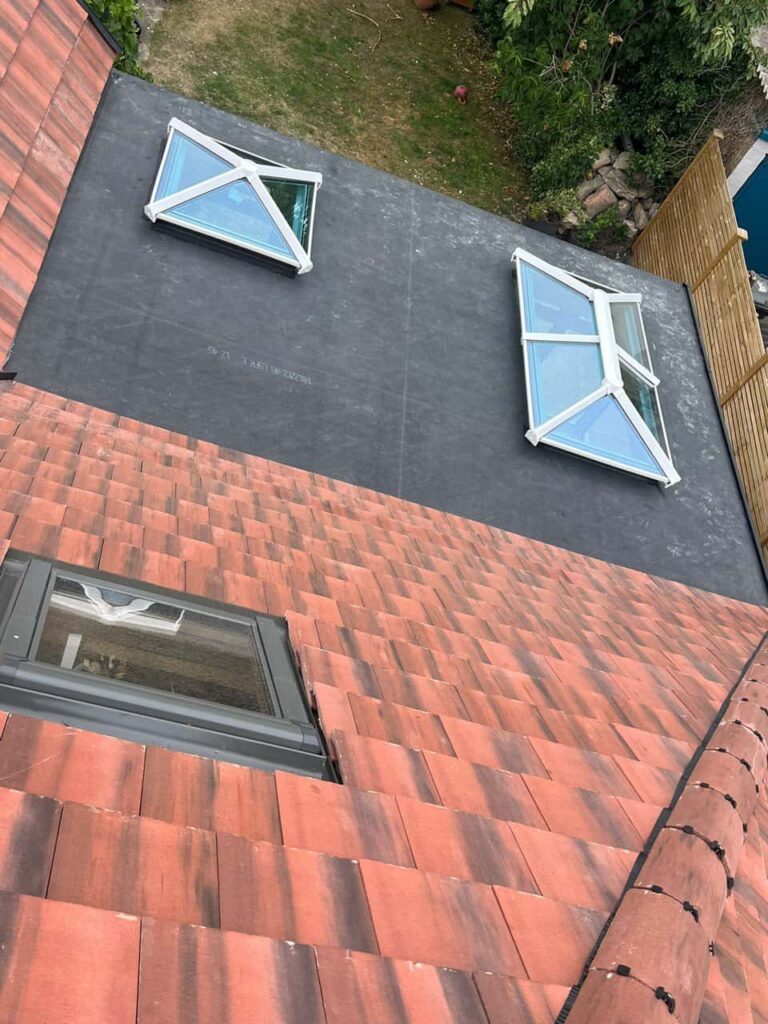
Flat roofs are a practical feature of many homes, extensions, garages and commercial buildings. However, because they have a shallow slope, they rely on effective drainage and a well-maintained waterproof covering to keep rainwater out. Over time, weather exposure, ageing materials and minor defects can compromise the roof’s performance.
For property owners in Biggin Hill, South East London, recognising the early signs of flat roof damage can help prevent leaks and avoid more extensive deterioration. Knowing when to arrange professional flat roof repairs is an important part of protecting your property and maintaining the condition of the roof.
Common Signs Your Flat Roof Needs Repairs
Flat roof problems do not always appear suddenly. Some develop gradually, so looking for changes to the roof covering and signs of moisture inside the building can help identify issues before they worsen.
Water Stains and Leaks Inside the Property
Damp patches on ceilings, peeling paint, discoloured plaster and persistent musty smells can indicate water entering through a damaged roof. You may notice these signs after heavy rainfall or find that an existing stain gradually becomes larger.
The visible damage inside does not necessarily sit directly beneath the point where water enters. Moisture can travel along roof layers and structural components before appearing indoors.
Professional inspection helps trace the source of the leak and determine whether the problem involves the roof covering, flashing, joints or another component. Addressing the underlying defect is essential for preventing the leak from returning.
Standing Water on the Roof
Flat roofs are designed with a slight fall to encourage rainwater to drain away. If water remains on the surface long after rainfall has ended, it may indicate blocked outlets, inadequate drainage or depressions in the roof.
Persistent pooling can place additional demands on the waterproof covering and increase the risk of deterioration around seams and vulnerable areas.
Keeping accessible drainage outlets clear of leaves and debris can help maintain water flow. However, if the same areas repeatedly collect water, a professional assessment can establish whether repairs or drainage improvements are necessary.
Cracks, Splits and Blisters
Flat roof coverings can deteriorate through exposure to sunlight, temperature changes and moisture. Depending on the material, this may cause cracks, splits, bubbling or blisters to develop.
These defects can weaken the waterproof layer and allow moisture to reach the materials beneath it. Blisters should not be punctured, as this can expose the underlying layers and make the damage worse.
A roofing professional can assess the affected area and recommend a repair method suited to the existing covering, whether it is felt, EPDM rubber, GRP fibreglass or another flat roofing system.
Loose Edges and Damaged Joints
Roof edges, seams and junctions are common points of vulnerability. Over time, adhesives and fixings may deteriorate, allowing sections of the covering to lift or separate.
Wind-driven rain can enter through these gaps, potentially causing damage beneath the roof surface. Problems may also develop around rooflights, vents, parapets and points where the roof meets a wall.
If you notice loose material or separated joints, arranging professional repairs promptly can help prevent further water ingress.
Sagging or Uneven Roof Sections
A visible dip or change in the shape of a flat roof should not be ignored. It may indicate trapped moisture, deterioration of the supporting structure or a drainage problem that has developed over time.
An uneven surface can also encourage water to collect in particular areas, increasing the risk of further damage.
Because sagging can involve more than the waterproof covering, it is important to have the roof assessed rather than simply patching the surface.
Why Prompt Flat Roof Repairs Matter
A small defect can allow moisture to penetrate the roof system repeatedly, especially during prolonged wet weather. If left unresolved, water ingress may damage insulation, roof decking, timber components and internal finishes.
Repeatedly applying temporary patches without identifying the original cause may only provide short-term relief. For example, repairing a split will not resolve a drainage issue that continues to leave water standing around the damaged area.
A professional inspection considers the roof’s overall condition, including the covering, joints, drainage and accessible supporting materials. This helps determine whether a localised repair is appropriate or whether more extensive work is needed.
For homeowners and businesses in Biggin Hill, South East London, dealing with defects early can help maintain the roof’s protective function and reduce the risk of recurring problems.
How to Help Prevent Flat Roof Damage
Although no flat roof is completely maintenance-free, routine care can help identify developing issues before they become serious.
- Check the roof periodically: Look for visible changes after periods of adverse weather, using a safe viewing position.
- Keep drainage outlets clear: Remove accessible leaves and debris so rainwater can drain away effectively.
- Address leaks promptly: Do not ignore damp patches or assume that a small stain will disappear on its own.
- Avoid unsuitable DIY repairs: Incompatible sealants or poorly applied patches can make future repairs more difficult.
- Arrange professional inspections: An experienced roofer can identify defects that may not be visible from ground level.
Avoid walking on the roof unless it is designed for safe access. Roofing surfaces can be slippery, and some coverings may be damaged by unnecessary foot traffic.
When Should You Contact a Roofing Specialist?
Professional attention is recommended if your roof develops persistent leaks, widespread cracks, loose seams, recurring standing water or visible sagging. You should also seek advice if previous repairs have failed to resolve the same problem.
The correct repair depends on the roof’s material, age and condition. A suitable assessment helps identify the cause of the damage and establish the most practical way to restore the covering.
Biggin Hill Roofing Repairs provides roofing repair services for properties in Biggin Hill, South East London. If you have noticed signs of deterioration or are concerned about a recurring leak, professional advice can help you understand the condition of your roof and the work required.
Conclusion
Flat roofs can develop problems ranging from minor cracks and loose joints to persistent leaks and drainage issues. Recognising these warning signs early allows homeowners to arrange appropriate repairs before moisture causes more extensive damage.
Regular maintenance, effective drainage and timely professional attention all help protect the roof’s condition. If your flat roof is showing signs of wear or water ingress, contact Biggin Hill Roofing Repairs to discuss your flat roof repair requirements in Biggin Hill, South East London.
Call us on: 01959 582 996
Click here to find out more about Biggin Hill Roofing Repairs
Click here to complete our contact form and see how we can help with your roofing needs.