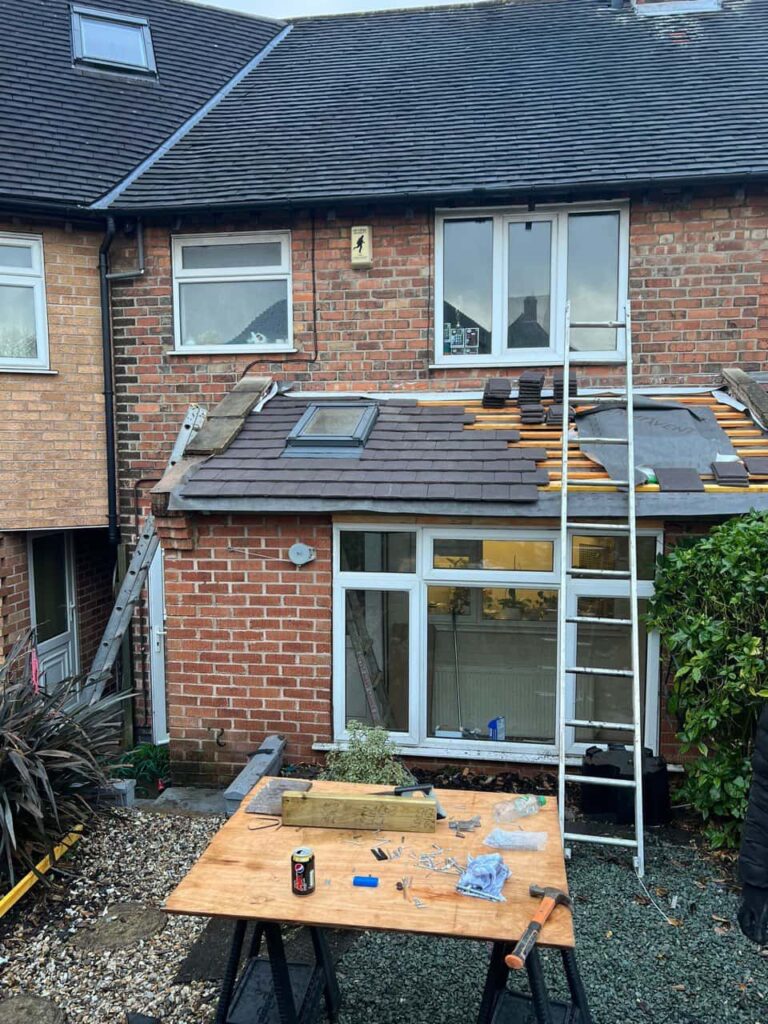
Flat and felt roofs rely on a continuous waterproof covering to protect the structure beneath them. Unlike pitched roofs, which shed rainwater quickly, flat roofs have only a slight gradient. Their surfaces, joints, edges and drainage points must therefore remain in good condition for water to leave the roof effectively.
Cracks and splits rarely develop without an underlying cause. Ageing materials, temperature changes, trapped moisture, movement and ineffective drainage can all weaken the covering. Understanding these causes helps property owners recognise when professional repairs are needed.
Common Causes of Flat and Felt Roof Damage
A flat roof functions as a complete system made up of the waterproof covering, roof deck, insulation, joints, upstands and drainage details. Damage to one component can place additional strain on the others, allowing a relatively small defect to develop into a persistent leak.
Natural Ageing of the Roof Covering
Roofing felt gradually changes as it is exposed to sunlight, rain, frost and fluctuating temperatures. The material can become less flexible over time, making it more vulnerable to cracking when the roof moves.
Signs of an ageing surface may include:
- Fine cracks across exposed areas
- A dry or brittle texture
- Worn mineral finishes
- Opened seams
- Thinning around drainage points
- Repeated defects in different sections
An older appearance does not automatically mean the roof needs complete replacement, but widespread deterioration should be assessed before further patching is carried out.
Expansion and Contraction
Roofing materials expand when heated and contract as temperatures fall. The supporting deck may also move at a different rate from the waterproof covering.
Repeated movement can place stress on seams, corners and areas where the roof meets walls or kerbs. Eventually, the felt may crease, pull apart or split at a weak point.
Damage caused by thermal movement commonly appears around:
- Roof edges
- Upstands
- Joints in the deck
- Previous repairs
- Pipes and outlets
- Changes in roof level
A successful repair must restore flexibility and weather resistance rather than simply covering the visible crack.
Standing Water and Poor Drainage
Flat roofs need carefully formed falls to direct rainwater towards suitable outlets. If the surface contains low points or the drainage becomes restricted, water may remain after rainfall.
Standing water can prolong the exposure of vulnerable areas and work into small defects. During colder conditions, moisture within a crack may also expand and make the opening larger.
Possible causes of ponding include:
- Blocked outlets
- Accumulated leaves and debris
- Inadequate surface falls
- Settlement within the roof deck
- Damaged or raised seams
- Poorly positioned drainage points
Removing standing water is not enough if the roof’s levels or outlets are causing it to return.
Movement in the Roof Deck
The waterproof layer depends on a firm, stable surface beneath it. If the deck flexes, swells or deteriorates, the movement may transfer into the felt.
Soft or uneven areas can indicate that moisture has already reached the underlying materials. Applying another surface patch without correcting the deck may result in the repair cracking or lifting.
A roofer should determine whether the defect is limited to the covering or extends into the supporting structure.
Failed Seams and Overlaps
Felt roofs are formed using sheets or sections that must be joined securely. These seams are vulnerable if they were not bonded correctly or if movement has caused them to separate.
Once an overlap begins to lift, wind and water can work beneath it. Moisture may then travel under the covering before appearing inside the property, making the true source difficult to identify.
The complete seam should be inspected because the visible opening may be only one part of a longer area of failed adhesion.
Blisters and Trapped Moisture
Blisters form when air or moisture becomes trapped beneath the roof covering and expands. They may appear as raised bubbles or larger uneven sections.
A blister is not always leaking immediately, but pressure, foot traffic or continued temperature changes can cause it to crack. Once the surface opens, water can enter beneath the felt and spread through the adjoining layers.
Cutting or puncturing a blister without understanding what lies beneath it can create a direct route for water ingress.
Damage Around Edges and Upstands
The edges of a flat roof and the vertical sections where it meets walls, rooflights or other features require careful detailing. These areas experience concentrated movement and are frequently exposed to rainwater.
Damage can occur when:
- The felt pulls away from an upstand
- Edge trims become loose
- Corners split
- Seals around penetrations deteriorate
- Flashing lifts or separates
- Water tracks behind the covering
Because these junctions connect different materials, they should be assessed as complete details rather than treated with an isolated patch.
Impact and Foot Traffic
Flat roofs can be damaged by dropped objects, ladders, tools and repeated walking. Even when the surface does not tear immediately, pressure may bruise the felt or weaken the deck beneath it.
Access routes are particularly vulnerable if the roof was not designed for regular foot traffic. Small punctures can be difficult to see, but they may admit water whenever it rains.
Any necessary access should be planned carefully to avoid placing additional strain on weakened areas.
Previous Repairs Are Breaking Down
Repairs can fail if they are applied over damp, dirty or unstable material. Incompatible products may also lose adhesion or respond differently to temperature changes.
Warning signs include:
- Cracking around the repair edges
- Patches lifting away
- Water entering beside an earlier repair
- Several layers of surface treatments
- Blistering beneath the patched section
Repeatedly covering the same area may make the defect harder to diagnose. The previous repair and surrounding roof should be examined together.
How Flat Roof Leaks Spread
The internal damp patch is not always directly below the external defect. Water can travel beneath the felt, along the roof deck or around insulation before reaching the ceiling.
A professional inspection may need to consider:
- The pattern and timing of the leak
- Seams and previous repairs
- Roof edges and upstands
- Outlets and drainage routes
- Soft or uneven areas
- The condition of the deck
- Signs of moisture inside the property
Tracing the route of the water is essential before deciding which section requires repair.
When Professional Attention Is Needed
Prompt assessment is advisable when cracks are widening, seams are opening or water remains on the roof for extended periods. Internal dampness, soft sections and repeated leaks also suggest that the problem may extend beyond the visible surface.
A roofer can establish whether the roof requires a local repair, attention to a larger section or more comprehensive work. The recommendation should be based on the condition of the complete system rather than the age of the roof alone.
Conclusion
Flat and felt roofs develop cracks, splits and leaks because of ageing, temperature movement, standing water, failed seams and deterioration in the supporting deck. Blisters, damaged edges and unsuccessful earlier repairs can also create routes for moisture.
Identifying the cause is essential for a dependable repair. If you have noticed damage or water ingress from a flat roof in Biggin Hill, South East London, Biggin Hill Roofing Repairs can inspect the affected area and recommend an appropriate solution. Contact the team to arrange a professional roof assessment.
Call us on: 01959 582 996
Click here to find out more about Biggin Hill Roofing Repairs
Click here to complete our contact form and see how we can help with your roofing needs.